Minimally Invasive Cardiac Surgery (MICS)
Advanced heart surgery through small incisions — faster recovery, less pain
Overview
Minimally Invasive Cardiac Surgery (MICS) refers to a spectrum of surgical techniques that allow Dr. Nisarga to perform complex cardiac procedures through small incisions, without splitting the breastbone. Instead of the traditional 20–30 cm midline incision, MICS uses incisions of 4–8 cm between the ribs or through smaller ports.
MICS encompasses several approaches including mini-thoracotomy, mini-sternotomy, and port-access techniques. These approaches can be used for a wide range of cardiac procedures including valve surgery, coronary bypass, and congenital heart defect repairs.
At KIMS Hospitals, Dr. Nisarga leads a comprehensive MICS programme, offering patients access to the latest minimally invasive techniques while maintaining the highest standards of safety and outcomes.
Key Facts
3–5 days
Typical Hospital Stay
4–6 cm
Incision Length
3–4 weeks
Return to Work
4–8 weeks
Full Recovery
Conditions Treated
Minimally Invasive Cardiac Surgery (MICS) is used to treat the following conditions
Mitral Valve Disease
Repair or replacement of the mitral valve through a small incision
Aortic Valve Disease
Aortic valve replacement via mini-sternotomy or intercostal approach
Tricuspid Valve Disease
Tricuspid valve surgery through minimally invasive access
Coronary Artery Disease
Multi-vessel bypass through small thoracic incisions (MICS CABG)
Atrial Septal Defect
Closure of holes between the upper heart chambers
Cardiac Tumours
Resection of cardiac masses through minimally invasive approaches
Symptoms
Patients with conditions requiring MICS may experience one or more of the following symptoms. It is important to note that some conditions may be asymptomatic in their early stages.
Important: These symptoms can also be caused by other medical conditions. If you experience any of these symptoms, please consult a qualified healthcare professional for an accurate diagnosis.
Diagnosis
A thorough diagnostic evaluation is essential for accurate diagnosis and treatment planning
Treatment Options
The choice of treatment depends on the specific condition, its severity, and individual patient factors
Medical Therapy
Medications to manage symptoms and optimize heart function
Catheter-Based Interventions
Transcatheter procedures for select valve or coronary conditions
Minimally Invasive Surgery (MICS)
Heart surgery through small incisions without sternotomy
Conventional Open Surgery
Traditional sternotomy approach for complex or high-risk cases
Surgical Approach
How the procedure is performed by Dr. Nisarga and his team
The specific MICS approach is tailored to each patient's condition and anatomy.
A 4–8 cm incision is made in the right or left chest between the ribs, avoiding the breastbone.
In some cases, a mini-sternotomy (partial breastbone division) of 6–8 cm may be used.
Specialized long-shafted instruments are used to perform the surgery through the small access point.
A video-assisted camera may be used to enhance visualization of the surgical field.
The heart-lung machine is connected through the groin (femoral cannulation) or directly through the chest incision.
After completing the procedure, the incision is closed with fine sutures for optimal cosmetic results.
Benefits
Why patients and physicians choose MICS
Surgical Results & Scarring
See the remarkable cosmetic outcomes of MICS — minimal scarring with excellent healing
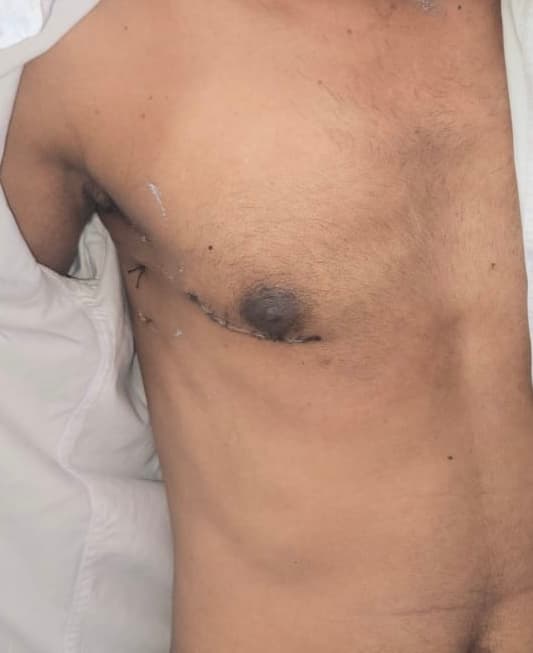
MICS incision — a small 4-6cm incision between the ribs, avoiding sternotomy
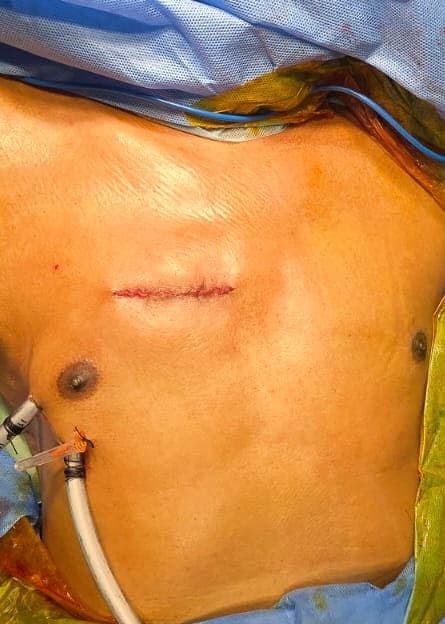
Healed MICS scar — excellent cosmetic outcome with minimal scarring
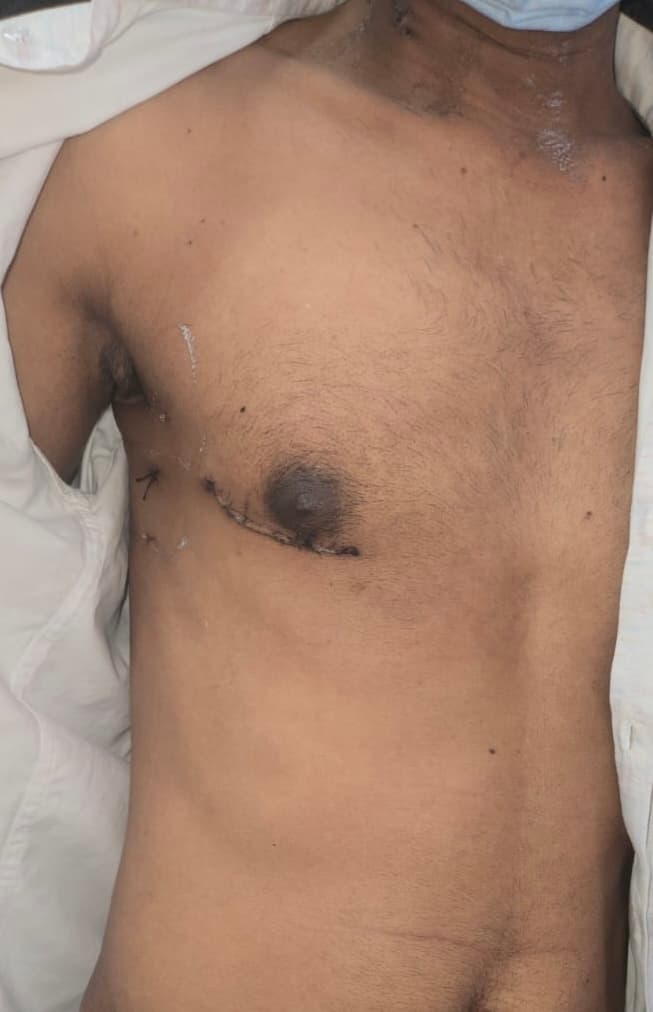
MICS port-access incisions — small openings for surgical instruments
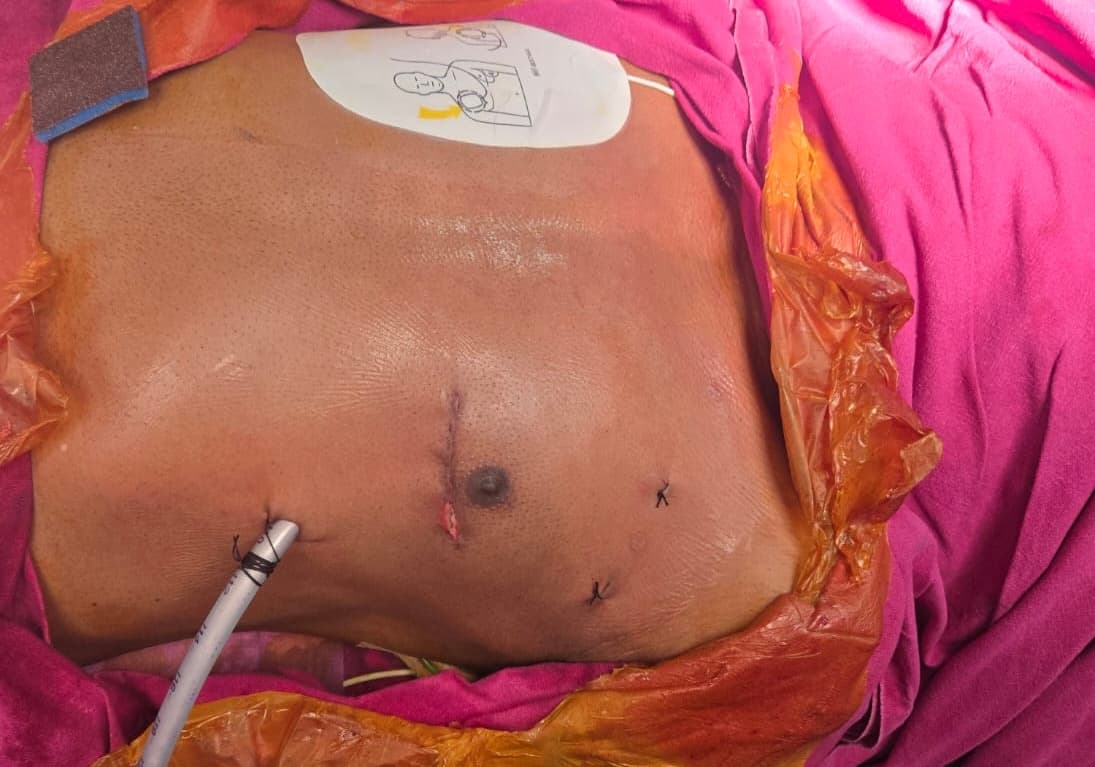
MICS scars during the healing process — quick recovery visible
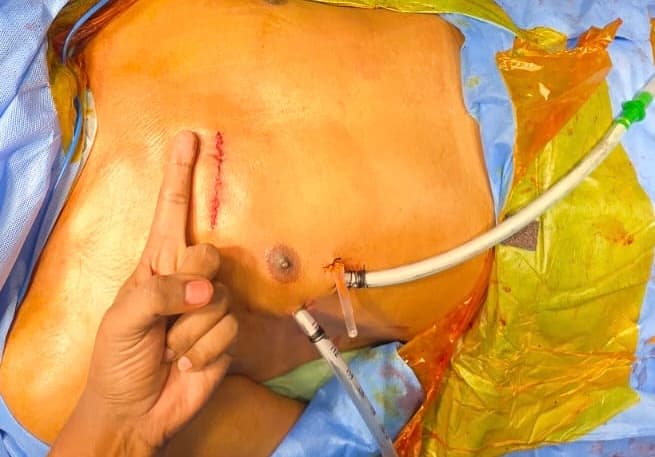
Fully healed MICS incisions — barely visible over time
Recovery & Rehabilitation
What to expect during the recovery period after MICS
A Word from Dr. Nisarga
MICS offers patients a less traumatic alternative to traditional open-heart surgery while maintaining equivalent safety and efficacy. Dr. Nisarga's expertise in multiple MICS techniques ensures that each patient receives the most appropriate minimally invasive approach for their specific condition. Not all patients are candidates for MICS, and a thorough evaluation determines the best surgical strategy for each individual.
Related Services
Explore other procedures offered by Dr. Nisarga
Schedule a Consultation
Take the first step towards advanced cardiac care. Dr. Nisarga and his team are here to help.